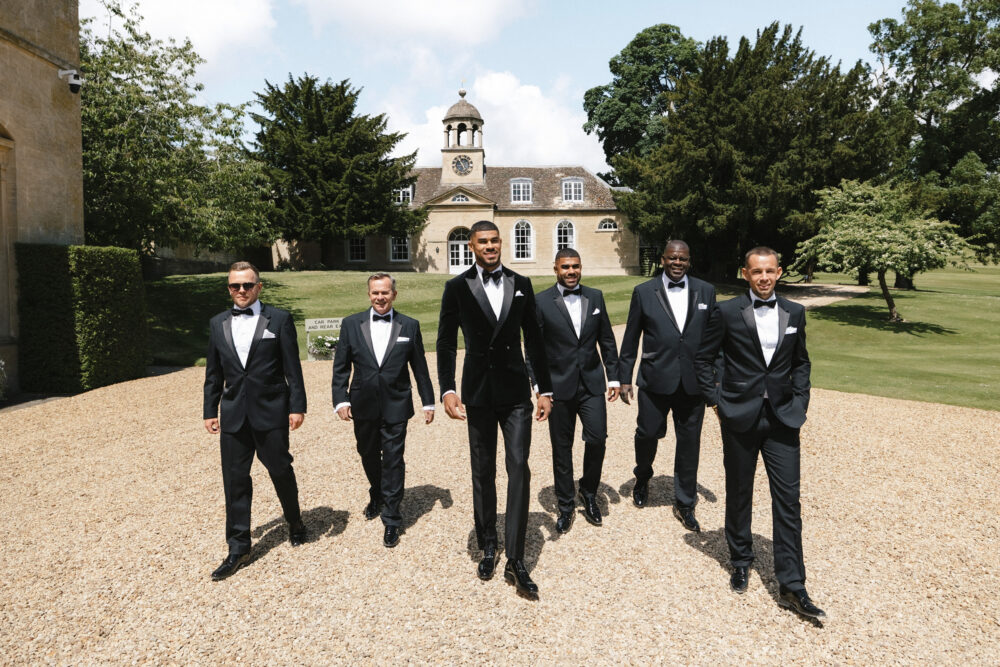
Figuring out how to match groomsmen’s suits sounds simple, but quickly becomes one of the most frustrating parts of planning your wedding look. Most grooms start with a vague idea like “we’ll all wear navy” and then realise there are dozens of decisions hiding underneath that one choice. Should everyone wear the same suit? Should you stand out? What if one groomsman hates the fit or colour?
The problem is that many wedding parties either go too far in one direction or the other. Some end up looking like a uniformed team with no personality, while others lean into variety and end up looking mismatched in photos. When that balance is off, it shows in every group shot, and those images last long after the day itself.
If you get this wrong, it is not just a styling issue. It affects confidence, cohesion, and the overall polish of the wedding. Guests might not be able to explain what is off, but they will notice it.
In this guide, you will learn exactly how to match groomsmen’s suits in a way that feels intentional, modern, and well-put-together. We will break down the difference between matching and coordinating, show you how to build a cohesive look step by step, and help you avoid the subtle mistakes that often ruin an otherwise strong wedding style.
Matching vs Coordinating: What Actually Works
The first decision when learning how to match groomsmen’s suits is to understand that “matching” does not always mean identical.
A fully matching look, where every groomsman wears the same wedding suit, can work well in very specific situations. Think formal venues, black tie settings, or traditional ceremonies where uniformity feels appropriate. In those environments, a consistent look reinforces the formality and keeps everything clean.
However, outside of those settings, exact matching can feel dated. More modern weddings tend to favour coordination rather than duplication. Coordination allows subtle variation while still maintaining a unified appearance.
Here is where most people get it wrong. They assume coordination means giving everyone freedom to choose their own look. That rarely works. Without structure, small differences quickly turn into visual noise.
A more refined approach is to create what stylists often call a “controlled variation”. This means:
- Keeping the same level of formality across all wedding suits
- Working within a defined colour palette
- Allowing small differences in shade, texture, or accessories
For example, a groom in a deep navy three-piece suit with groomsmen in slightly lighter navy suits creates depth without losing cohesion. It looks intentional rather than accidental.
One useful way to think about this is in terms of hierarchy. The groom should visually sit at the top, the groomsmen should support that look, and nothing should compete for attention. When that hierarchy is clear, even small variations feel polished.
How to Match Groomsmen Suits Step by Step
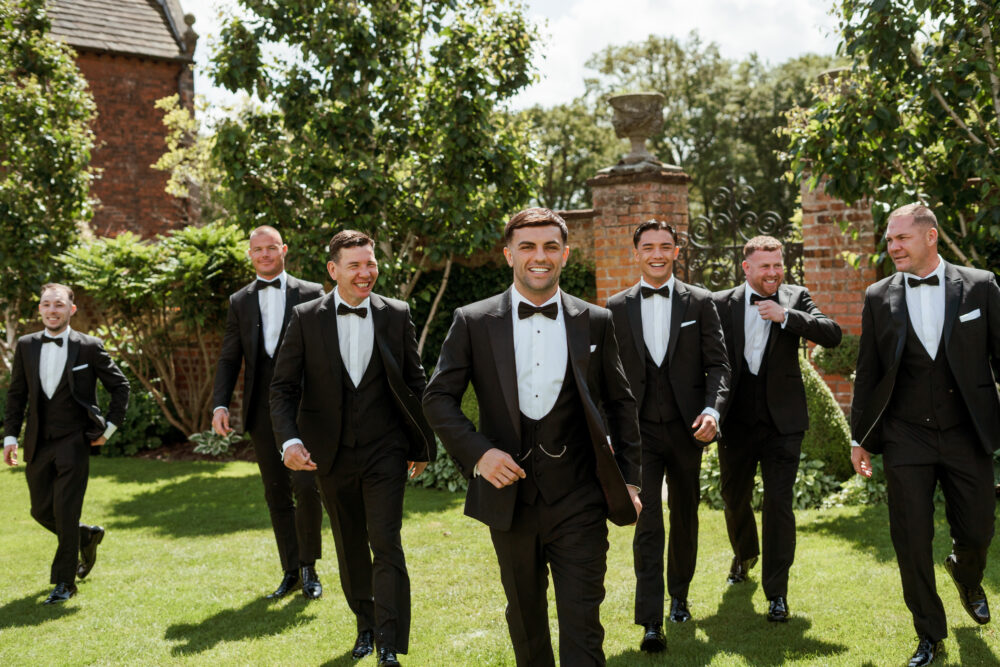
If you want a reliable method for matching groomsmen suits, it helps to follow a structured process rather than making isolated decisions.
Start with the Groom
Everything should begin with your suit. Not the groomsmen. Not the colour scheme. Your outfit sets the tone for the entire wedding party.
Choose your suit based on:
- The venue
- The time of year
- The level of formality
Once that is locked in, the rest becomes easier. For instance, if you choose a structured navy three-piece suit, the groomsmen should maintain the same level of polish. Switching them into something more casual would break the visual consistency.
A common mistake is trying to adapt the groom’s look after the groomsmen have already chosen theirs. That often leads to compromises that weaken the overall style.
Match Formality Before Colour
It is tempting to jump straight into colour decisions, but formality matters more.
A black tie wedding demands consistency. All groomsmen should be in formal wedding suits of the same level. Mixing a highly formal groom’s outfit with more relaxed groomsmen looks creates a disconnect that stands out immediately in photos.
Even in less formal settings, keeping the same structure helps. A group wearing tailored two-piece or three-piece wedding suits will always look more cohesive than a mix of tailored and relaxed silhouettes.
Build a Controlled Colour Palette
Colour is where most coordination happens, but it needs boundaries.
Rather than picking one exact shade, choose a palette. For example:
- Navy and mid-blue tones
- Charcoal and light grey variations
- Soft neutrals for summer weddings
Research into visual perception shows that people naturally group similar tones together, which is why tonal dressing works so well in weddings. It feels cohesive without being repetitive.
A tip that often gets overlooked is to see the suits together in natural light before the wedding. Colours that look similar indoors can appear completely different outside, especially in bright conditions.
Use Texture and Fabric Intentionally
Texture is an underrated tool for matching groomsmen’s suits.
Two suits in the same colour can look completely different depending on the fabric. A matte wool suit feels more classic, while a slightly textured weave adds depth.
This is an easy way to create a subtle contrast. For example, the groom might wear a richer, more refined fabric, while the groomsmen wear a simpler version of the same colour.
That difference is not loud, but it creates a clear focal point.
Bring It Together with Accessories
Accessories are often the final step that ties everything together.
Matching ties, pocket squares, or boutonnières can unify a group even when the suits are not identical. At the same time, slight variations can be used to highlight the groom.
One practical tip from experience is to keep accessories consistent in tone rather than identical in pattern. For example, different tie patterns within the same colour family often look better than forcing everyone to use the exact same design.
Best Suit Combinations for Different Wedding Styles
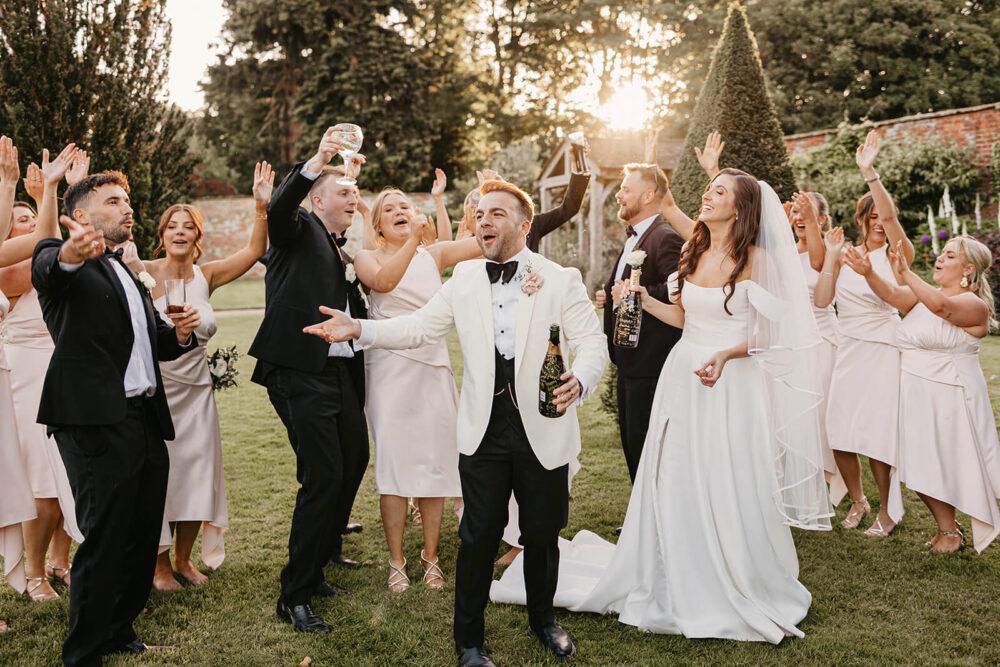
Once you understand the basics of matching groomsmen’s suits, the next step is to apply that knowledge to your specific wedding style.
Formal and Evening Weddings
Darker tones dominate here. Navy, charcoal, and black all work well because they photograph cleanly under artificial lighting.
A groom in a slightly deeper tone than the groomsmen creates a subtle contrast. For example, a midnight navy suit against lighter navy suits adds dimension without feeling forced.
Summer and Outdoor Weddings
Lighter tones come into play, but balance is important. Pale colours can look washed out if not handled carefully.
Stone, light grey, or soft blue suits work well, especially when paired with slightly darker accessories to anchor the look.
A useful tip is to avoid going too light across the entire group. Keeping at least one element, such as shoes or ties, slightly darker prevents the look from losing structure.
Rustic or Countryside Settings
Texture becomes more important than colour here.
Earthy tones like olive, brown, or muted greens create a natural feel. Pairing these with textured fabrics adds depth and avoids the look becoming too flat.
One subtle trick is to keep the base suits simple and introduce personality through smaller details. For example, you might keep all the groomsmen in classic navy wedding suits, but add individuality through something like textured ties in slightly different weaves or patterns within the same colour family. From a distance, the group still looks completely coordinated, but up close there is depth and character.
Modern and Fashion-Led Weddings
This is where tonal dressing really shines.
Different shades of the same colour can create a layered, contemporary look. For example, varying shades of blue across the group creates visual interest while staying cohesive.
The key is restraint. Too many colours or styles quickly turn the look into something disjointed.
Common Questions and Mistakes to Avoid
When people search for how to match groomsmen suits, they are often trying to avoid making the wrong decision. Here are some of the most common concerns and how to handle them.
Should the Groom Match the Groomsmen Exactly?
Not usually. The groom should feel connected to the group but still stand out.
This can be achieved through small details rather than bold changes. A different waistcoat, a slightly richer suit colour, or a more refined fabric often works better than a completely different outfit.
Can Groomsmen Wear Different Suits?
Yes, but only within a controlled framework.
If you allow variation, keep at least one consistent element. That might be colour, fabric, or accessories. Without that anchor, the group will look unplanned.
What Is the Biggest Mistake to Avoid?
Overcomplicating the look.
Trying to incorporate too many ideas often leads to confusion. A simple, well-executed plan almost always looks better than a complex one.
Another common issue is ignoring fit. Even the best coordination will fall apart if the suits do not fit properly. Tailoring makes a noticeable difference, especially in group photos.
How Do You Keep Everyone Happy?
This is where practicality comes in. Not every groomsman will have the same body type or preferences.
One approach that works well is choosing a consistent style and colour, then allowing slight adjustments in fit or minor details. This keeps the look cohesive while ensuring everyone feels comfortable.
A useful real-world tip is to involve the groomsmen early in the process. Giving them clear guidance avoids last-minute surprises and ensures everything comes together smoothly.
Conclusion
Learning how to match groomsmen suits is less about strict rules and more about understanding balance. The goal is not to make everyone look identical, but to create a cohesive wedding party that feels considered and effortless.
When you focus on formality first, build a controlled colour palette, and use texture and accessories wisely, the result is a group that looks sharp without feeling overdone. Small details, like how the groom stands out or how the suits interact in different lighting, make a bigger impact than most people expect.
If you take one thing away, let it be this. Simplicity done well will always outperform complexity done poorly.
When the suits feel natural, fit properly, and work together visually, the entire wedding look elevates. And that is what people remember.