Choosing a wedding suit for a wedding abroad sounds easy until you start looking properly. Search for ‘what should a groom wear for a destination wedding’ and you will see a lot of familiar advice: wear beige, choose pale blue, go for linen, keep it relaxed. That advice can work, but it misses the most important point.
A destination wedding suit should not be chosen by colour alone. It should be chosen by cloth, construction, setting, dress code and the role the groom needs to play visually on the day. A pale wedding suit can still feel hot if it is made from the wrong material. A classic black tuxedo can feel far more comfortable than expected if it is cut from lightweight fabric that breathes properly.
That is where many grooms get caught out. They choose something that looks “destination appropriate” on a hanger, only to find it creases badly, blends into the venue, looks too similar to the guests, or feels uncomfortable by the time the photographs begin. If your destination wedding is taking place somewhere with whitewashed walls, pale stone, cream interiors, beige terraces and guests in light summer colours, the usual pastel groom look may not stand out at all.
This guide explains what a groom should wear for a destination wedding by looking beyond the obvious. We will cover the best wedding suits for warm weather, why fabric matters more than colour, when black tie can still work abroad, how to avoid looking like one of the guests, and what practical details make the biggest difference once you are actually out there.
The Short Answer: Choose Cloth Before Colour
The best groom outfit for a destination wedding is a well-cut wedding suit made from breathable fabric, chosen to suit the venue, climate and dress code. Linen blends, lightweight wool, wool-linen-silk cloths and formal tuxedo fabrics can all work, depending on the setting.
The mistake is assuming that pale always means cool and dark always means hot. In reality, a beige polyester wedding suit can feel warmer and less comfortable than a classic black tuxedo made from lightweight wool. Wool is often associated with colder weather, but fine wool can absorb moisture vapour and release it into the air, which is one reason it can perform well in warm-weather tailoring. The International Wool Textile Organisation notes that wool can absorb up to 35% of its own weight in moisture before releasing it as vapour.
That is why the groom should not rush straight to beige, pale blue or pastel simply because the wedding is abroad. Those colours may suit the destination, but they may also be exactly what the guests are wearing. More importantly, they will not save you if the fabric is wrong.
A better starting point is this: choose the cloth first, then choose the colour.
Match the Wedding Suit to the Destination
A destination wedding is not one single dress code. A beach wedding in Greece, a villa wedding in Italy, a vineyard wedding in France and a black tie celebration in Monaco all ask for different wedding suits. The location matters, but it should guide the look rather than dictate it completely.
For a beach wedding, a softer and lighter wedding suit can be a great option. A wool-linen-silk blend in stone, pale grey, sand or muted blue will usually feel more refined than an overly casual linen outfit. If the ceremony is genuinely relaxed, an open collar can work well, but the shirt still needs to be sharp. The groom should look comfortable, not underdressed.
For a Mediterranean villa wedding, stronger styling often works better than very pale tailoring. Many villas use white walls, cream stone, soft neutral interiors and warm paving. A beige or pastel wedding suit can fade into that backdrop. A deep navy double-breasted wedding suit, a white tuxedo jacket, or a classic black lightweight tuxedo can create much more presence without looking heavy.
For a vineyard or countryside wedding, consider earthy shades and textured cloth. Olive, tobacco, warm brown, navy and soft green can sit beautifully against natural surroundings. These colours still feel destination appropriate, but they give more depth than standard pastel tones.
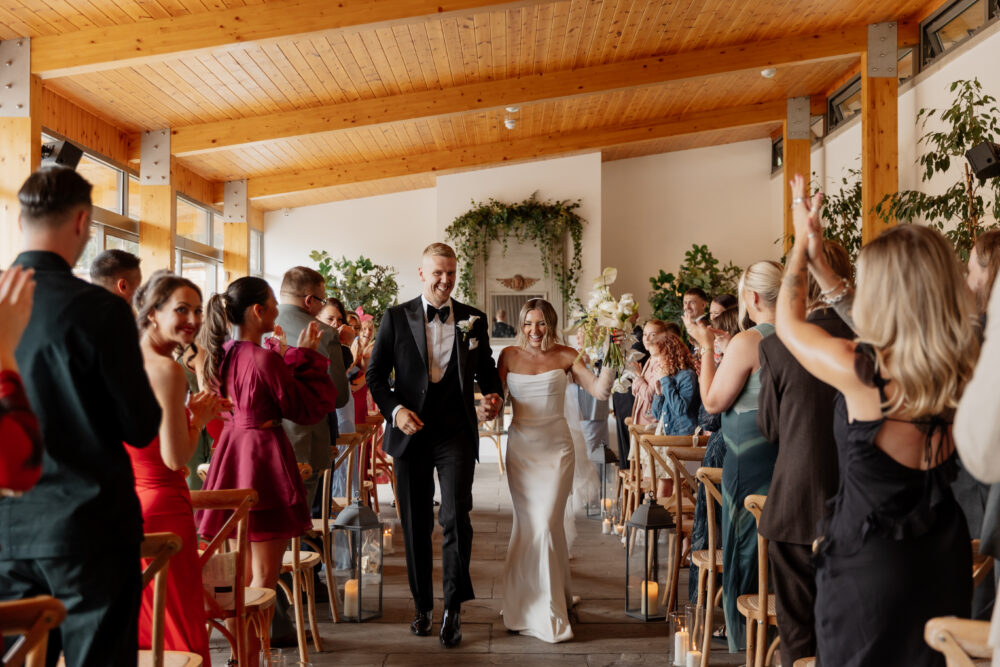
For a luxury hotel wedding or evening ceremony abroad, black tie should not be dismissed. A classic black tuxedo in lightweight fabric can look exceptional, especially once the day moves into evening. It also makes the groom instantly distinct from the guests, which is not always easy when everyone has been told to dress for a destination wedding.
The time of day should also influence the choice. A midday ceremony in direct sun asks for a different wedding suit from a 6pm ceremony, followed by dinner under outdoor lighting. Heat, humidity and direct sun change how clothing feels. NOAA explains that the heat index rises as temperature and relative humidity rise, meaning warm weather can feel significantly hotter when humidity is high.
That is why the best destination wedding attire starts with the full setting, not just the country name.
Why Fabric Matters More Than Colour

Most grooms go straight to colour. Beige feels safe. Pale blue feels summery. Cream feels coastal. These can all be good choices, but they are secondary decisions.
Fabric decides whether the wedding suit breathes, holds shape, resists creasing and remains comfortable through the ceremony, photographs, drinks reception and evening meal. This matters even more at a destination wedding because the outfit has to deal with travel before it even reaches the venue.
Pure linen is often seen as the default choice for wedding suits abroad. It is light, breathable and visually relaxed. The drawback is that it creases heavily. Some creasing is part of linen’s character, but there is a difference between relaxed texture and looking crushed by the time the ceremony starts. After flights, transfers, outdoor photos, sitting down, standing up and hugging guests, pure linen can lose its polish quickly.
A more modern option is a blended cloth. For a destination wedding suit, a wool, linen and silk blend can be particularly effective. A cloth made with around 60% wool, 30% or more linen and a smaller silk content can give the groom the breathability and texture associated with linen, while adding better shape retention and a more refined finish. The wool helps the suit recover, the linen keeps it light, and the silk can add texture and softness without making the wedding suit feel heavy.
Lightweight wool is also worth serious consideration. It is not just for winter. A fine wool wedding suit can breathe well, drape cleanly and look sharper for longer than many casual summer fabrics. This is especially useful if the wedding has a formal dress code or if the groom wants to wear black tie abroad.
Then there is polyester, which should be approached carefully. A pale polyester suit may look suitable for a beach wedding at first glance, but standard polyester tailoring is not the same as a breathable fabric. Polyester is synthetic, and although some technical fabrics are engineered for performance, a cheap or dense polyester wedding suit may trap heat and feel uncomfortable in a warm setting.
Bamboo can also be a lighter option, particularly for shirting, but it may have a slight sheen. That sheen can become more noticeable in bright sun or flash photography. For most grooms, a refined wool-linen-silk blend will usually offer a better balance of comfort, texture and elegance.
If you only remember one point, make it this: the fabric that the wedding suit is made from is more important than whether it is beige, black, blue or cream.
Do Not Rule Out a Classic Black Tuxedo
There is a common belief that a groom should not wear black for a destination wedding because it will be too hot. Sometimes that is true. A heavy black suit in poor fabric, worn at midday on a beach, is unlikely to be comfortable. But that does not mean black is always wrong.
A classic black tuxedo made from 100% lightweight wool can breathe, manage moisture and feel far better than many grooms expect. It also gives the groom something that many destination outfits lack: contrast.
This is important. Guests at destination weddings often wear beige, pale blue, cream, light grey, pastel pink or sage. Venues are often pale and neutral too. If the groom wears the same colour family, he may blend into both the guests and the setting. In photographs, that can make the outfit feel less intentional.
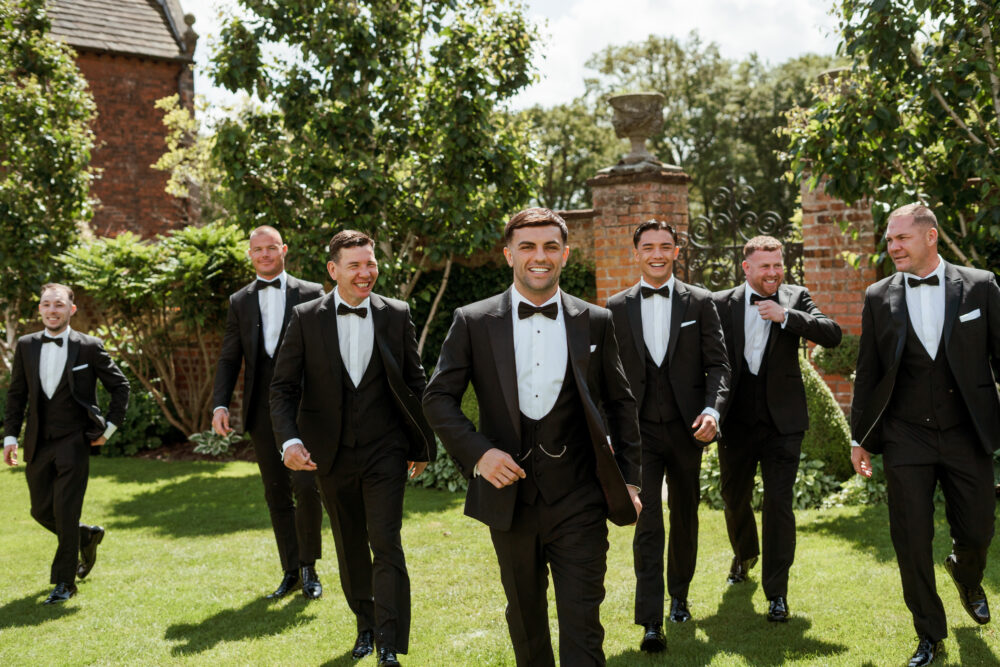
A tuxedo solves that problem. It gives structure, occasion and identity. No guest is likely to turn up in the same thing if the dress code is clearly managed. For an evening ceremony, a villa reception, a formal hotel wedding or a black tie destination wedding, a classic black tuxedo can be the strongest choice in the room.
A white tuxedo jacket is another excellent option. It feels lighter visually than black while still giving the groom a formal, distinctive look. Paired with black trousers, a crisp shirt, black bow tie and a neatly folded pocket square, it can look refined without feeling predictable.
There is also room for a double-breasted wedding suit if the groom wants presence without wearing full black tie. A double-breasted jacket in a lightweight cloth can create a strong silhouette, especially for a villa, garden or European city wedding. The key is to keep the cloth light and the fit precise. Too much structure in the wrong fabric can feel stiff, but the right cloth can look elegant and easy.
This is the nuance many grooms need. Do not rule out a tuxedo because someone once said black is too hot abroad. Rule out bad cloth, poor fit and the wrong timing. A well-made tuxedo can be more comfortable and more memorable than a pale suit made from the wrong material.
Choose a Colour That Makes the Groom Stand Out
Colour still matters, of course. It just should not be the first decision.
For a relaxed beach wedding, soft neutrals can work well. Stone, sand, pale grey, muted blue and warm cream all suit coastal settings. These colours look especially good when the ceremony is informal and the styling is natural.
For a villa wedding, think carefully about the backdrop. If the venue has white walls, cream floors and beige stonework, a pale neutral wedding suit may not offer enough contrast. Navy, black, olive, tobacco, chocolate brown or a white tuxedo jacket can look more deliberate.
For a vineyard wedding, richer natural shades are often more flattering. Olive, deep green, burgundy, navy and warm brown can complement the scenery without looking like standard guest wedding attire.
For formal evening weddings, black, midnight blue, ivory and deep navy are difficult to beat. They carry the sense of occasion that a destination wedding still deserves.
The groom should also think about what the wedding party and guests will wear. If the dress code tells guests to wear light neutrals, the groom should avoid looking identical. If the groomsmen are in beige or pale blue, the groom may need a stronger colour, sharper cut, different lapel style or more formal accessories.
A pocket square can also help create distinction. It does not add warmth, but it gives the jacket more polish. A white pocket square with a dark tuxedo is timeless. A soft tonal pocket square with a lighter wedding suit can make the outfit feel complete without looking overdone.
The aim is not to be loud. It is to be clearly, confidently the groom.
Keep the Dress Code Clear
A destination wedding often feels more relaxed, but the groom’s outfit should still match the dress code. This is where many couples run into problems. If the couple imagines smart tailoring but guests interpret the invitation as “holiday clothes”, the visual balance can feel uneven. If guests are told to wear light suits and the groom also wears one, he may not stand apart.
For a formal destination wedding, a tuxedo or sharply tailored wedding suit is appropriate. Black tie can work abroad, especially for evening weddings, hotels, villas and elegant private venues. A classic black tuxedo, white tuxedo jacket or midnight navy tuxedo can all suit this level of formality.
For a smart but relaxed wedding, a two-piece wedding suit in a lightweight fabric is usually ideal. The groom can wear a tie for the ceremony and remove it later, or keep the collar open if the setting allows. Loafers will often feel more natural than heavy lace-up shoes.
For a relaxed beach wedding, softer tailoring works best. That does not mean the groom should look casual. A lightweight wedding suit, crisp shirt and carefully chosen shoes will still feel elevated while respecting the setting.
Shorts are rarely the best answer for the groom. Even if the wedding is on a beach, shorts can make the groom look less formal than the occasion deserves. If the couple wants a very casual ceremony, tailored trousers without a jacket will usually look better than shorts.
A useful rule is this: the groom can be relaxed, but he should not look like he is simply attending the wedding.
Travel Practicalities Matter More Than You Think
The wedding suit has to survive the journey before it can perform on the day. That makes travel planning part of the outfit decision.
Pure linen can be risky here because it creases so easily. If the groom wants a linen look, a blended cloth will often travel better. Wool-linen-silk blends and lightweight wool wedding suits usually hold shape more effectively than pure linen, especially after a flight or long transfer.
A garment bag is strongly recommended. World Nomads advises that garment bags are useful for protecting wedding clothing during travel, and the same principle applies to a groom’s wedding suit. If possible, carry the wedding suit rather than checking it in. Lost luggage is frustrating for any guest, but for the groom it can become a serious problem.
Once you arrive, hang the suit immediately. Do not leave it folded while you unpack everything else. Ask the venue or planner about steaming or pressing before the wedding day. Pack a second shirt too. Warm climates, nerves and long photographs can make a spare shirt invaluable before the evening reception.
Shoes should also be tested before travelling. Loafers are often the best destination wedding choice because they are smart without feeling too formal. For sand or stone, avoid anything too heavy or slippery. Wear them in before the trip, because a wedding abroad is the worst possible time to discover a painful heel or tight toe box.
One more practical point: get dressed as late as reasonably possible. If the room is warm or humid, putting the jacket on too early can make the suit feel less fresh before the ceremony even starts. Keep the shirt and trousers on, then add the jacket closer to photographs.
FAQs
What should a groom wear for a destination wedding?
A groom should wear a wedding suit that suits the climate, venue and dress code. The best choice is usually made from lightweight fabric, such as lightweight wool or a wool-linen-silk blend. For a relaxed beach wedding, lighter colours can work well. For a formal villa or evening wedding, a classic black tuxedo or white tuxedo jacket can be a better option.
Can a groom wear black for a destination wedding?
Yes, a groom can wear black for a destination wedding if the fabric and setting are right. A classic black tuxedo in lightweight wool can be breathable, elegant and distinctive. It is often better than a pale polyester suit that looks summery but traps heat.
Is linen best for a destination wedding suit?
Linen is breathable and light, but pure linen creases heavily. A linen blend, especially one with wool and silk, can provide many of the benefits of linen while keeping the wedding suit sharper throughout the day.
What colour wedding suit works best abroad?
There is no single best colour. Beige, cream, pale blue and light grey can work for a beach wedding. Navy, black, olive, brown and ivory can work better for villas, evening weddings and formal settings. The groom should also consider what the guests are likely to wear.
Should the groom wear a tie?
It depends on the dress code. A tie or bow tie works well for formal weddings. An open collar can suit a relaxed beach wedding or informal villa ceremony. If the groom removes the tie later, the shirt still needs to fit properly and look intentional.
What shoes should a groom wear for a destination wedding?
Loafers are usually the safest choice. They work well with wedding suits, feel less heavy than formal lace-up shoes and suit warm-weather settings. Sandals should only be worn if the wedding is extremely relaxed and the dress code clearly allows them.
Conclusion
So, what should a groom wear for a destination wedding? The best answer is not simply “wear beige linen”. The groom should choose a wedding suit that suits the setting, stands apart from the guests, respects the dress code and feels comfortable in the climate.
Fabric should come first. A breathable fabric will make more difference than a pale colour. Lightweight wool, wool-linen-silk blends and carefully chosen tuxedo cloths can perform far better than expected in warm destinations. Pure linen can work, but it may crease heavily. Polyester may look light, but that does not mean it will feel cool.
A classic black tuxedo should not be ruled out. Nor should a white tuxedo jacket, a double breasted wedding suit or a deeper colour that gives the groom more presence. In many destination venues, especially pale villas and neutral outdoor spaces, stronger styling can be exactly what the groom needs.
The right destination wedding suit should make the groom feel comfortable, confident and clearly dressed for one of the most important moments of his life. If you need a destination wedding suit that is tailored to your venue, climate and personal style, get in touch with our team to start planning the right look for your wedding abroad.